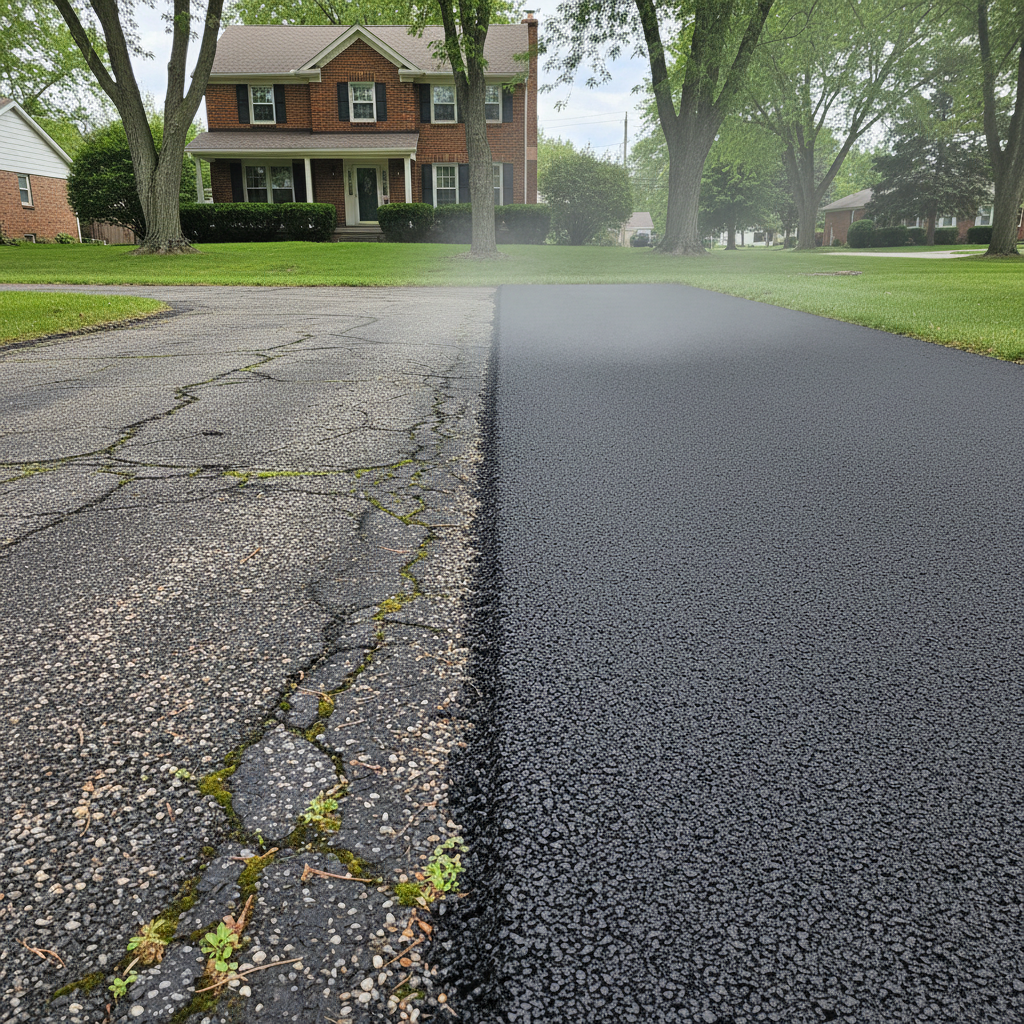
Overlay vs. Full Replacement: What's the Difference?
Alright Detroit homeowners, let's talk driveways. You've got cracks, potholes, or maybe your asphalt just looks tired. You're probably wondering, "Do I need a whole new driveway, or can I just get it resurfaced?" That's the core question: an asphalt overlay versus a full remove and replace job. As someone who's been laying asphalt in this city for years, I've seen both done right and done wrong, and I'm here to tell you what you need to know.
An asphalt overlay, sometimes called resurfacing, is exactly what it sounds like. We clean up your existing driveway, make any necessary repairs to the base layer (like filling big cracks or potholes), and then lay a fresh layer of new asphalt right on top of the old one. It's like putting a new skin on your driveway.
A full replacement, on the other hand, means we tear out every single bit of your old asphalt, right down to the dirt. Then we inspect and often re-grade your sub-base, add a fresh layer of aggregate (crushed stone), compact it, and then lay down brand new asphalt from scratch. It's a complete do-over.
Cost: Where Your Money Goes
Let's be blunt: cost is usually the first thing on everyone's mind. Generally speaking, an overlay is going to be significantly cheaper upfront than a full replacement. Why? Because we're doing less work. We're not hauling away tons of old asphalt, and we're not rebuilding the base from the ground up. You're saving on labor, material disposal, and some of the base prep.
However, and this is a big however, that upfront saving doesn't always translate to long-term value. If your driveway's foundation is shot, an overlay is just putting a band-aid on a broken leg. You'll pay less now, but you might be paying again sooner than you'd like.
Durability & Lifespan: Built to Last (or Not)
This is where the rubber meets the road, literally. A full replacement, assuming it's done right by a reputable company like Fortune Asphalt Detroit, is going to give you the longest lifespan. We're talking 20-30 years, sometimes more, with proper maintenance. That's because we're ensuring the base — the most critical part of any pavement — is solid. Here in Detroit, with our freeze-thaw cycles and sometimes questionable soil conditions (especially in older neighborhoods where fill dirt was common), a strong base is non-negotiable.
An overlay? You're looking at maybe 8-15 years, if the underlying asphalt was in decent shape to begin with. The new layer is only as good as what's underneath it. If your old driveway had severe alligator cracking (lots of small, interconnected cracks that look like alligator skin), or significant dips and humps, an overlay might just mirror those imperfections over time. The cracks will eventually reflect through the new surface.
Maintenance: Keeping It Looking Good
Both options require maintenance, but the type and frequency can differ. For a brand new, full-depth asphalt driveway, regular sealcoating every 2-3 years is your best friend. It protects against UV rays, water penetration, and keeps it looking sharp. You'll also want to address any small cracks as they appear, filling them before they become bigger problems.
With an overlay, you'll still want to sealcoat. But you might find yourself dealing with reflective cracking sooner. That's when cracks from the old layer underneath work their way up through the new asphalt. You'll need to be diligent about crack filling to prevent water from getting into that old, weaker base.
Appearance: First Impressions Matter
A brand new, full-depth asphalt driveway looks fantastic. It's smooth, dark, and uniform. It adds serious curb appeal to your home. There are no ghost lines from old repairs or subtle dips that an overlay might inherit from the previous surface.
An overlay will definitely improve the look of a tired, cracked driveway. It'll be smooth and black initially. However, if the underlying surface had significant undulations, you might still see some of those slight variations. And as I mentioned, reflective cracking can pop up, which will affect the pristine look over time.
My Recommendation for Detroit Homeowners
Look, I'm not going to tell you an overlay is always a bad idea. It's a viable option if your existing driveway's base is still very stable, with minimal structural issues, and you're just dealing with surface wear and tear. Maybe you're planning to sell in a few years and just need a facelift.
But for most Detroit homeowners looking for a long-term solution, especially with our harsh winters and the constant freeze-thaw cycles that wreak havoc on pavement, I almost always recommend a full asphalt replacement. You're investing in a solid foundation, which means fewer headaches and a longer-lasting driveway. You pay more upfront, but you get true peace of mind and a driveway that will stand up to Michigan's abuse for decades. It's the smarter long-term investment for your home.
```